

Most people would say recruitment begins when a job is approved.
I disagree.
Some of the best hiring outcomes I’ve been involved in started long before a recruiter posted a job. They began with conversations about where the business was heading, what capabilities would be needed in the future, and how talent could help get there.
That’s workforce planning.
When it’s done well, recruitment becomes proactive instead of reactive. Recruiters have the opportunity to understand the market, build relationships, and develop talent pipelines before the job is approved.
Unfortunately, that’s not always how it happens.
Throughout my career, I’ve worked with organizations where that didn’t have conversations about the talent they needed in the future, either at all or with their recruiters. Then when priorities changed unexpectedly, asthey often do, recruiters were expected to find highly specialized talent immediately. Everyone worked incredibly hard, but the hiring process became driven by urgency instead of strategy. The focus shifted to filling today’s vacancy rather than preparing for tomorrow’s business.
I’ve also seen organizations take a very different approach.
Business leaders, hiring managers, HR, and recruiters came together well before positions became available. They talked about growth plans, succession, retirement risk, emerging skills, and where the organization wanted to be a year from now.
Those conversations gave recruiters something genuinely valuable.
Time.
Time to understand the talent market.
Time to engage prospective candidates.
Time to advise hiring leaders instead of simply responding to hiring requests.
In my experience, that’s where recruitment creates its greatest value.
Over the past few years, another piece has become increasingly important: Talent Intelligence.
We now have access to more market information than ever before. AI can help us identify hiring trends, forecast demand for critical skills, analyze labour market data, and surface insights in minutes that once took days to uncover.
That’s a tremendous advantage.
But information alone doesn’t create better hiring decisions.
AI can tell us that a particular skill is becoming scarce. It can’t decide whether the organization should build that capability internally, broaden its hiring criteria, hire earlier than planned, or rethink the role entirely.
Those decisions still require business context, experience, and judgment.
That’s why I don’t see AI replacing recruiters.
I see it changing where we create value.
The more AI helps us automate administrative work and analyze information, the more time we have to partner with hiring leaders, understand business priorities, and have better conversations with candidates.
In many ways, I think that’s where our profession is heading with recruiters becoming Talent Advisors.
We’re helping organizations understand not only who they should hire today, but what capabilities they’ll need tomorrow. We’re connecting labour market intelligence with business strategy. We’re asking different questions and helping leaders think beyond the immediate vacancy.
To me, that’s an exciting evolution of our profession.
The organizations that consistently hire well aren’t always the ones with the biggest recruitment teams or the latest technology.
They’re the ones that think ahead.
They understand that workforce planning isn’t an annual exercise. It’s an ongoing conversation that connects business goals with talent strategy.
Technology will continue to evolve. AI will become more sophisticated. Talent Intelligence will become even more powerful.
Those advances should make us better.
But they’ll never replace thoughtful planning, sound judgment, or the conversations that help organizations make smarter decisions about their people.
Because the best hiring outcomes don’t start with a requisition.
They start with a conversation.
By Ted Pierni
Head of Delivery | Robertson & Company
Ted Pierni is Head of Delivery at Robertson & Company. With more than 25 years of experience in Talent Acquisition, RPO, workforce strategy, and recruitment leadership, he writes about emerging trends shaping the future of hiring.


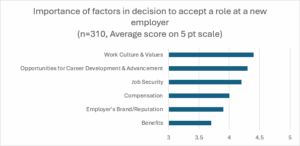 Source: Roberston & Company, Data as of June 11th, 2026, Job Appeal Survey n=310 respondents