


One of the things I enjoy most about working in RPO is that we have the opportunity to hear directly from candidates every day. We also have the ability to step back and look at the bigger picture.
Recently, we surveyed candidates to better understand what influences their decision to accept a new opportunity. The results reinforced something I’ve been seeing for quite some time.
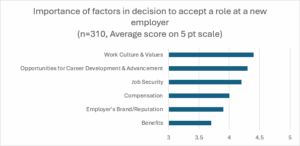 Source: Roberston & Company, Data as of June 11th, 2026, Job Appeal Survey n=310 respondents
Compensation matters.
It just isn’t the whole story.
Our survey found that work culture and values ranked highest, followed closely by career development opportunities and job security. Compensation remained important, but it wasn’t the number one driver. Candidates are thinking more broadly about where they want to build their careers.
That reflects the conversations recruiters are having every day.
After more than 25 years in Talent Acquisition across banking, consulting, and RPO, I’ve learned that candidates rarely make career decisions based on salary alone. They’re evaluating whether they’ll be supported, whether they can grow, and whether they’ll enjoy working with the people around them.
Those are much harder things to measure than years of experience or technical skills.
It’s also where recruiters continue to make a real difference.
AI has transformed many parts of recruitment. It can search faster, summarize resumes, identify patterns, and help recruiters become more efficient. I use these tools myself, and I believe they’ll continue to improve.
What AI can’t do is build trust during a conversation or recognize the hesitation in a candidate’s voice when they talk about a previous manager. It can’t fully understand whether someone is motivated by flexibility, stability, leadership, learning opportunities, or purpose. Those insights come from listening, asking thoughtful questions, and building relationships over time.
I’ve written previously about the importance of maintaining the human side of recruitment, even as technology continues to evolve. This survey reinforces why that matters.
If recruiters only focus on matching resumes to job descriptions, we’ll miss the conversations that explain why someone is actually considering a move.
I’ve also seen organizations lose exceptional candidates because communication broke down. Delays, inconsistent messaging, or unclear expectations often create uncertainty long before compensation becomes an issue.
Candidates today expect transparency.
They understand that hiring takes time. What they don’t want is silence.
That’s why I believe candidate experience has become a competitive advantage. Every conversation, every follow-up, and every expectation we set contributes to how candidates view an organization.
As recruiters, we’re often the first relationship a candidate has with a company. We influence how they experience the hiring process and how they perceive the employer behind it.
Technology will continue to change how we recruit. I don’t see that slowing down.
What won’t change is the importance of understanding people.
The recruiters who will continue to stand out are those who combine technology with curiosity, empathy, and good judgment. They’ll use AI to become more efficient while spending more time having better conversations.
Because in the end, candidates don’t simply choose jobs.
They choose people, leaders, and environments where they believe they can succeed.
By Ted Pierni
Head of Delivery | Robertson & Company
Ted Pierni is Head of Delivery at Robertson & Company. With more than 25 years of experience in Talent Acquisition, RPO, workforce strategy, and recruitment leadership, he writes about emerging trends shaping the future of hiring

